Proudly Serving Southern California Since 2001!
Smart vs. Programmable Thermostats for SoCal Homes

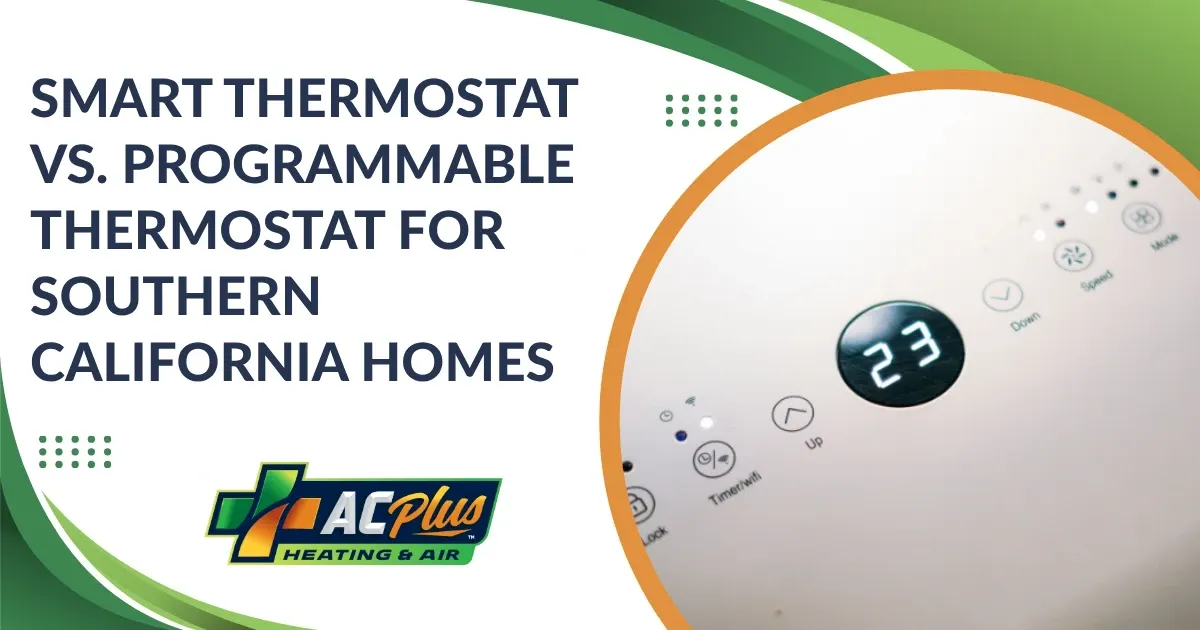
Smart Thermostat vs. Programmable Thermostat for Southern California Homes

Choosing a new thermostat used to be simple. Today, shelves and websites are full of programmable models, Wi-Fi models, and “learning” models that promise to cut your energy use. For homeowners in Rancho Cucamonga and across the Inland Empire, the real question is which one fits your home, your schedule, and your equipment.

AC Plus Heating & Air Conditioning has installed thermostats for Southern California families since 1998. Here is a clear comparison to help you decide.

Ready to upgrade your controls? Our team handles smart thermostat installation and programmable thermostat setup, so contact us online or call 760-243-4440 to get started.

What Is a Programmable Thermostat?

A programmable thermostat lets you set a schedule so your system changes temperature automatically. You choose the settings once, and the thermostat follows them every day.

Most programmable models offer:

  • 7-day, 5-2, or 5-1-1 scheduling
  • Multiple daily time periods, such as wake, away, return, and sleep
  • Temporary overrides when plans change
  • A simple display with physical buttons or a basic touchscreen

They work well for households with predictable routines. The main limitation is that they only follow the schedule you give them. If your plans change, you adjust by hand.

What Is a Smart Thermostat?

A smart thermostat does everything a programmable model does and adds Wi-Fi connectivity. You can control it from your phone, tablet, or voice assistant from anywhere.

Common smart features include:

  • Remote control: Change the temperature from work, the road, or the couch.
  • Learning and auto-scheduling: Some models adapt to your habits over time.
  • Geofencing: The thermostat detects when you leave or approach home and adjusts accordingly.
  • Energy reports: See how long your system runs and where energy goes.
  • Alerts and reminders: Get notices for filter changes, extreme temperatures, or system issues.
  • Integration with smart home systems: Connect to voice assistants and other devices.

How Do They Compare Side by Side?

Programmable thermostat:

  • Lower upfront cost
  • No Wi-Fi required
  • Reliable for steady schedules
  • Limited flexibility and no remote access

Smart thermostat:

  • Higher upfront cost
  • Wi-Fi required for full features
  • Adapts to changing routines
  • Remote access, reports, and alerts

Neither option is automatically better. The right choice depends on how you live.

Which Thermostat Fits Southern California Homes?

Our region has a unique mix of conditions that influence this decision. Summers in Rancho Cucamonga bring long stretches of 95 to 105 degree days, and cooling can be your biggest energy expense. Winters are mild, but cold mornings and dry Santa Ana conditions still call for reliable heating.

Smart thermostats tend to shine in Southern California because of these factors:

  • Long cooling seasons: More run time means more opportunity to save with smarter scheduling.
  • Time-of-use electric rates: Many utility plans charge more during late afternoon and evening hours. A smart thermostat can pre-cool your home before peak hours and ease back during them.
  • Variable schedules: Commuters on the I-10, I-15, and 210 often have unpredictable return times, and remote control helps.
  • Heat wave events: Alerts and remote adjustments are useful when you are away during extreme heat.

Programmable thermostats still make sense for homes with consistent routines, rental properties, vacation homes, or anyone who prefers simple buttons and no apps.

Last summer, a Rancho Cucamonga family told us they were coming home every evening to a house that was too hot because their old thermostat could not adjust to changing work hours. We installed a smart thermostat with geofencing. Their home now begins cooling as they approach, and they no longer run the AC all day at a low temperature just to be safe.

Will a Smart Thermostat Actually Save Money?

It can, but savings depend on how you use it. Studies and program data have shown that smart thermostats can reduce heating and cooling costs for many households. The Department of Energy notes that setting back your thermostat by 7 to 10 degrees for eight hours a day can lower annual energy costs, and smart models make that easy to sustain.

Savings are usually strongest when:

  • You were not using a schedule before
  • Your home is empty for long periods
  • You have time-of-use electric rates
  • You take advantage of geofencing and remote control

Savings are smaller if you already run an efficient schedule or your system is old and inefficient. A new thermostat cannot fix a failing air conditioner or leaky ducts.

Are Smart Thermostats Compatible with Every System?

Not always. Compatibility is one of the most important factors, and it is where many do-it-yourself installations go wrong.

Check these items before you buy:

  • Equipment type: Heat pumps, multi-stage systems, and variable-speed equipment need specific compatibility.
  • Wiring: Many smart thermostats need a common wire (C-wire) for continuous power. Older homes may not have one.
  • Voltage: Line-voltage systems, such as some electric baseboard heaters, require a different type of thermostat.
  • Wi-Fi coverage: The signal must reach the thermostat location.
  • Zoning systems: Zoned homes may need specialized controls.

A mismatched thermostat can cause short cycling, poor heat pump performance, or even equipment damage. Professional installation helps avoid these problems and ensures the settings are configured correctly for your system.

How Do Heat Pumps Change the Decision?

Heat pumps are common in Southern California homes and ductless systems. They respond differently than furnaces to temperature changes, and large setbacks can trigger backup electric heat, which costs more to run.

If you have a heat pump, look for a thermostat designed for heat pump control. A properly configured smart model can manage recovery smoothly and avoid unnecessary use of auxiliary heat. A basic programmable thermostat with aggressive setbacks may do the opposite.

Need same-day AC or furnace repair? Contact AC Plus now.

What Should I Consider Before Buying?

Use this quick checklist:

  1. Your schedule: Is it predictable or constantly changing?
  2. Your equipment: Furnace, heat pump, air conditioner, or mini-split?
  3. Your utility rates: Do you have time-of-use pricing?
  4. Your comfort with technology: Do you want an app and alerts, or simple buttons?
  5. Your wiring and Wi-Fi: Will your home support the features you want?
  6. Your budget: Include installation, not just the device price.

If you answered “changing schedule,” “heat pump,” or “time-of-use rates,” a smart thermostat is probably worth the investment. If your routine is steady and you want simple control, a quality programmable model can serve you well.

When Should I Call a Professional?

Consider professional installation if:

  • You have a heat pump, multi-stage, or zoned system
  • Your home lacks a C-wire
  • You are not comfortable working with wiring
  • You want help configuring schedules and settings
  • Your current thermostat shows signs of failure

A technician can confirm compatibility, install the device in an ideal location, and make sure your system is communicating correctly.

Frequently Asked Questions About Smart and Programmable Thermostats

Do smart thermostats work without Wi-Fi?

Most still function as basic thermostats without Wi-Fi, but you lose remote access and many automated features.

Are smart thermostats hard to use?

Most are designed to be intuitive, and professional setup helps you get started.

Can a smart thermostat be hacked?

Reputable brands use encryption and security updates. Use a strong Wi-Fi password and keep your thermostat software current.

Will a smart thermostat work with my old furnace?

Often yes, but compatibility depends on wiring and system type. A technician can verify before you buy.

How long do smart thermostats last?

Many last 10 years or more, though software support can vary by manufacturer.

Get the Right Thermostat with AC Plus

For more than two decades, families across Southern California have trusted AC Plus Heating & Air Conditioning for dependable comfort. Our licensed technicians install and configure both smart and programmable thermostats with upfront pricing and same-day service. Schedule trusted heating and cooling service with AC Plus Heating & Air Conditioning, and see why your neighbors choose AC Plus.
When to Replace a Thermostat - Signs of HVAC Failure

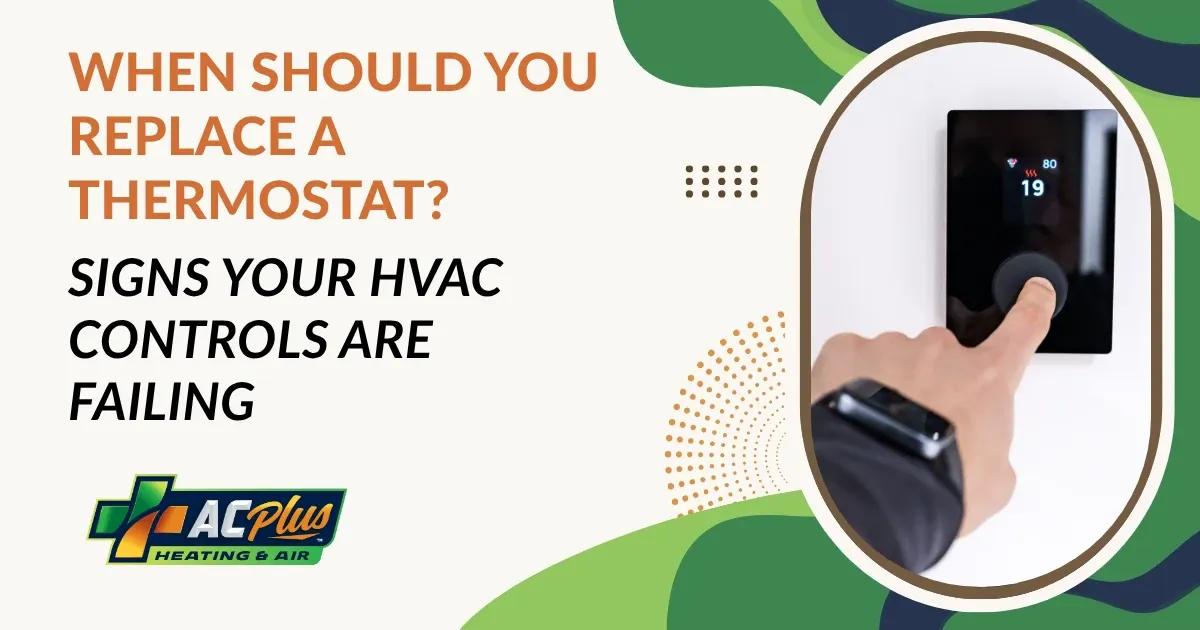
When Should You Replace a Thermostat? Signs Your HVAC Controls Are Failing

Your thermostat is the brain of your heating and cooling system. When it works well, you barely notice it. When it starts to fail, your home can feel uncomfortable, your energy bills can climb, and you may blame your furnace or air conditioner for a problem that is really a small wall-mounted device.

AC Plus Heating & Air Conditioning has been diagnosing and installing HVAC controls across the Inland Empire since 1998. Here is how to tell when your thermostat needs repair, when it needs replacing, and what to do next.

Not sure whether your thermostat needs repair or replacement? Contact us online or call 760-243-4440 to schedule a diagnostic with our licensed technicians.

What Does a Thermostat Actually Do?

A thermostat senses the temperature in your home and tells your system when to turn on and off. It sends signals to your furnace, heat pump, or air conditioner to keep the space at your chosen setting.

If the thermostat reads the temperature incorrectly or sends faulty signals, your equipment responds to bad information. That can mean short cycling, uneven comfort, or a system that will not start at all.

What Are the Signs Your Thermostat Is Failing?

Not every comfort problem points to the thermostat, but these symptoms are common clues:

  • The display is blank or flickering: This can mean dead batteries, a wiring issue, or a failing unit.
  • The temperature reading is wrong: If the thermostat says 72 degrees but the room feels much warmer or cooler, the sensor may be out of calibration.
  • The system will not turn on or off: A thermostat that fails to send the right signal can leave your equipment stuck.
  • The system short cycles: Frequent on and off cycles can be caused by a faulty thermostat or a poorly located one.
  • Settings do not hold: The schedule resets, or the unit ignores your changes.
  • Buttons or touchscreen are unresponsive: Worn components or software glitches can make the device hard to use.
  • Your bills rise without explanation: A thermostat that causes the system to overrun wastes energy.
  • The thermostat is very old: Many last about 10 years, and older models can lose accuracy.

Is It Really the Thermostat or Something Else?

A few simple checks can help you narrow it down before calling a professional.

  1. Replace the batteries if your thermostat uses them.
  2. Confirm the mode and setting. Make sure it is set to heat or cool, and the target is far enough from the current temperature to trigger the system.
  3. Check the breaker and the furnace switch to make sure power is on.
  4. Look at the air filter. A clogged filter can cause overheating or freezing that shuts down your system, which can look like a thermostat problem.
  5. Inspect the thermostat location. Direct sunlight, a nearby lamp, a drafty hallway, or a heat vent can skew readings.

If these steps do not resolve the problem, the issue may be wiring, a control board, or the thermostat itself. Avoid opening wiring panels unless you are comfortable with low-voltage systems, and always shut off power first.

How Do Southern California Conditions Affect Thermostats?

Rancho Cucamonga‘s climate puts steady demand on HVAC controls. Long cooling seasons with 100-degree afternoons mean your thermostat signals your air conditioner for months at a time. In cooler months, cold mornings and dry Santa Ana conditions bring frequent heating cycles.

Local factors that can shorten thermostat life include:

Last summer, a Rancho Cucamonga family called us during a heat wave because their AC kept shutting off every few minutes. They assumed the compressor was failing. The cause was an old thermostat mounted on a sun-baked wall that read the temperature incorrectly. We replaced it with a new unit in a better location, and the system ran normally again. It was a far smaller repair than they had feared.

Should I Repair or Replace a Thermostat?

Many thermostat issues are simple to fix, but replacement is often the better choice.

Repair may be enough if:

  • The problem is dead batteries or a loose wire
  • The unit is relatively new
  • The thermostat only needs recalibration or a better location

Replacement is usually smarter if:

  • The thermostat is 10 years old or more
  • The display or buttons are failing
  • Readings are inaccurate or inconsistent
  • It cannot support modern features
  • You want better energy management

Thermostats are among the least expensive parts of an HVAC system, so replacing a failing one is typically a cost-effective way to restore comfort.

What Are the Risks of Ignoring a Failing Thermostat?

A bad thermostat can do more than annoy you. Left alone, it can lead to:

  • Higher energy bills from constant or poorly timed operation
  • Premature wear on your furnace, heat pump, or air conditioner from short cycling
  • Uneven comfort and rooms that never reach the right temperature
  • Frozen evaporator coils if the AC runs when it should not
  • Unexpected breakdowns on the hottest or coldest days
  • Safety concerns if heating equipment cannot shut off properly

Catching the problem early protects the much more expensive equipment it controls. Need same-day AC or furnace repair? Contact AC Plus now.

What Type of Thermostat Should I Choose?

There are three main options.

  • Non-programmable: Simple and low cost, with manual adjustments only.
  • Programmable: Lets you set schedules for different times of day and week.
  • Smart: Connects to Wi-Fi, allows remote control from your phone, learns your habits, and offers usage reports.

When choosing a replacement, consider:

  • Compatibility with your system, including heat pumps and multi-stage equipment
  • Whether your home has a common wire for power
  • Your comfort habits and schedule
  • Desired features such as geofencing, humidity control, and filter reminders

Professional installation ensures proper wiring, correct system settings, and a good mounting location away from sun, drafts, and heat sources.

How Do I Know It Is Time to Call a Professional?

Call a technician if:

  • Your system does not respond even after replacing batteries
  • You see error codes on the display
  • The thermostat is warm, buzzing, or showing signs of electrical issues
  • Your home never reaches the set temperature
  • You are unsure about wiring or compatibility
  • You are installing a smart thermostat with a heat pump or multi-stage system

A technician can test the thermostat, check the wiring, and confirm that the problem is not in the equipment itself.

Frequently Asked Questions About Replacing a Thermostat

How long does a thermostat last?

Many last about 10 years, though lifespan varies by model and usage.

Why does my thermostat say one temperature but my house feels different?

The sensor may be inaccurate, or the thermostat may be placed in a spot that reads unusually warm or cool.

Can a bad thermostat cause high energy bills?

Yes. Faulty readings or poor control can cause your system to run longer than needed.

Is a smart thermostat worth it?

For many homeowners, yes. Remote control, schedules, and usage tracking can improve comfort and help manage energy use.

Can I replace a thermostat myself?

Simple swaps are possible, but incorrect wiring can damage equipment. Professional installation is safer, especially for heat pumps and smart models.

Restore Reliable Comfort with AC Plus

For more than two decades, families across Southern California have trusted AC Plus Heating & Air Conditioning for dependable comfort. Our licensed technicians handle thermostat diagnostics, replacement, and smart thermostat installation with upfront pricing and same-day service. Call AC Plus Heating & Air Conditioning in Rancho Cucamonga today for reliable HVAC service, and see why your neighbors choose AC Plus.

Santa Ana Winds, Wildfire Smoke, and HVAC Systems - Rancho Cucamonga

How Santa Ana Winds and Wildfire Smoke Affect HVAC Systems in Rancho Cucamonga

Anyone who has lived in Rancho Cucamonga for a few autumns knows the pattern. The wind picks up out of the desert, the air turns hot and bone dry, and a haze of dust or smoke settles over the foothills. These conditions are hard on people, and they are hard on heating and cooling equipment too.

AC Plus Heating & Air Conditioning has been serving Rancho Cucamonga and keeping Inland Empire homes comfortable since 1998, and we see the effects of Santa Ana season and wildfire smoke on HVAC systems every year. Here is what happens, what to watch for, and how to protect your home.

Protect your home’s air and equipment with indoor air quality solutions from our Rancho Cucamonga team. Contact us online or call (951) 783-3745 to schedule a filter upgrade or system inspection.

What Are Santa Ana Winds and Why Do They Matter for HVAC?

Santa Ana winds are strong, dry winds that blow from the inland deserts toward the coast, most often in fall and winter. They funnel through passes and canyons near the San Gabriel Mountains, which puts Rancho Cucamonga squarely in their path.

For your HVAC system, these winds bring three main problems:

  • Dust and debris: Wind carries dirt, leaves, and plant material into outdoor units and around intake areas.
  • Very low humidity: Dry air affects comfort and can make your home feel colder than the thermostat indicates.
  • Power disruptions: High winds can cause outages or voltage fluctuations that stress sensitive equipment.

How Do Santa Ana Winds Affect Your Outdoor Unit?

Your outdoor condenser or heat pump relies on steady airflow across its coils. When windblown debris collects on the coil surface or around the unit, airflow drops and the system works harder.

Common problems after a wind event include:

  • Leaves, twigs, and trash lodged against the coil fins
  • A layer of fine dust coating the coils
  • Bent fins from flying debris
  • Fan blades struck by branches
  • Clogged condensate drains from dust buildup

A system running with restricted airflow can overheat, lose efficiency, and wear out its compressor early. After a major wind event, turn off the system at the thermostat and inspect the area around your unit. Remove loose debris by hand and avoid forcing anything into the coils.

How Does Wildfire Smoke Affect Your HVAC System?

Wildfire smoke contains fine particles known as PM2.5, which are small enough to travel deep into the lungs. These particles also pass through standard low-grade filters and settle on indoor surfaces, including HVAC components.

When smoke is in the air, your system can:

  • Pull smoke inside through the return side, leaks, and fresh-air intakes
  • Clog filters much faster than normal
  • Spread fine particles through your ductwork
  • Leave soot and odor on coils and blower components
  • Lose airflow and efficiency as filters load up

A clogged filter is more than an air quality problem. It restricts airflow, which can cause a furnace to overheat or an air conditioner’s coil to freeze.

What Should I Do During a Smoke Event?

Last fall, a Rancho Cucamonga homeowner called us during a smoky week because her AC was blowing weak air and the house smelled like a campfire. Her filter was so loaded with ash that it had turned gray-brown, and airflow had nearly stopped. We replaced it, cleaned the coil, and recommended a higher-grade filter and an air purifier. Her home was clear within a day.

Follow these steps when smoke is present:

  1. Check the air quality index for your area before opening windows.
  2. Keep windows and doors closed to limit smoke entering your home.
  3. Set your system to recirculate rather than pulling in outdoor air, if your equipment has this option.
  4. Run the fan so air continues moving through the filter.
  5. Inspect your filter more often, even weekly during heavy smoke, and replace it when it looks dirty.
  6. Use a portable HEPA purifier in bedrooms and living spaces if available.
  7. Seal obvious leaks around doors and windows.

What Filter Should I Use for Smoke Season?

Filters are rated by MERV, which measures how well they capture particles. Basic fiberglass filters catch large debris but little smoke. A MERV 13 filter is widely recommended for capturing fine smoke particles, and higher-efficiency options exist for homes that can support them.

There is one important caution. Not every system is designed to handle a thick, high-MERV filter. Restricting airflow can cause its own problems. Before upgrading, have a technician confirm that your blower and ductwork can handle it. If they cannot, there are other solutions, such as media filter cabinets and whole-home air purification.

How Do Dry Winds Affect Indoor Comfort and Health?

Santa Ana conditions can drop indoor humidity well below the comfortable range of 30 to 50 percent. Dry air can lead to:

  • Dry skin, irritated eyes, and scratchy throats
  • Nosebleeds and worsened allergy or asthma symptoms
  • Static shocks and cracking wood furniture
  • A colder feeling at the same temperature

A whole-home humidifier can restore balance during dry stretches, especially in winter when your heater runs more. It works with your existing system to add moisture evenly throughout the house.

Can Power Outages and Surges Damage My HVAC System?

High winds can trip circuits, knock out lines, or cause quick voltage spikes when power returns. Compressors and control boards are particularly sensitive to surges.

To protect your equipment:

  • Install a whole-home or HVAC-specific surge protector
  • Wait about five minutes after power returns before restarting your system
  • Turn the thermostat to off during an outage, then back on after power stabilizes
  • Schedule an inspection if your unit makes unusual noises or does not restart

Need same-day AC or furnace repair? Contact AC Plus now.

What Maintenance Helps Most Before Fall and Winter?

Preparing your system before wind and fire season reduces the chance of a breakdown when you need it most. A seasonal checklist should include:

  • Replacing or upgrading your air filter
  • Cleaning the outdoor coil and clearing surrounding debris
  • Checking blower, fan motors, and electrical connections
  • Inspecting ductwork for leaks that pull in dusty or smoky air
  • Testing the thermostat and safety controls
  • Flushing the condensate drain

Ignoring these steps can lead to reduced airflow, higher energy bills, frozen coils, and unexpected failures during a smoky or windy week.

When Should I Call a Professional?

Call a technician if you notice:

  • A persistent smoky or burnt smell from your vents
  • Weak airflow even after changing the filter
  • Visible soot around registers
  • A unit that will not start after a power outage
  • Strange noises, such as rattling or grinding
  • Rising energy bills without a clear reason

A professional can clean sooty components, check airflow, and recommend air quality upgrades matched to your home.

Frequently Asked Questions About Santa Ana Winds, Smoke, and HVAC

Should I run my AC during wildfire smoke?

Yes, if the air is recirculating and the filter is clean. Closing outside air intakes helps keep smoke out.

How often should I change my filter during smoke season?

Check it weekly and replace it as soon as it looks gray or clogged. Do not wait for the normal schedule.

Will a HEPA purifier replace my HVAC filter?

No. Portable purifiers work well for individual rooms, but your HVAC filter protects the system itself.

Can smoke damage my air conditioner?

Heavy ash and soot can clog coils and filters and reduce efficiency. Regular cleaning prevents lasting damage.

Do I need an air purifier for the whole house?

It is a good option if you live near the foothills or are sensitive to smoke. A technician can help you choose the right air purification system.

Protect Your Home with AC Plus

For more than two decades, families across Southern California have trusted AC Plus Heating & Air Conditioning for dependable comfort. Our licensed technicians offer tune-ups, filtration upgrades, humidifiers, and whole-home air purification, all with upfront pricing. Schedule trusted heating and cooling service with AC Plus Heating & Air Conditioning, and see why your neighbors choose AC Plus.
Best Winter Thermostat Settings - Rancho Cucamonga

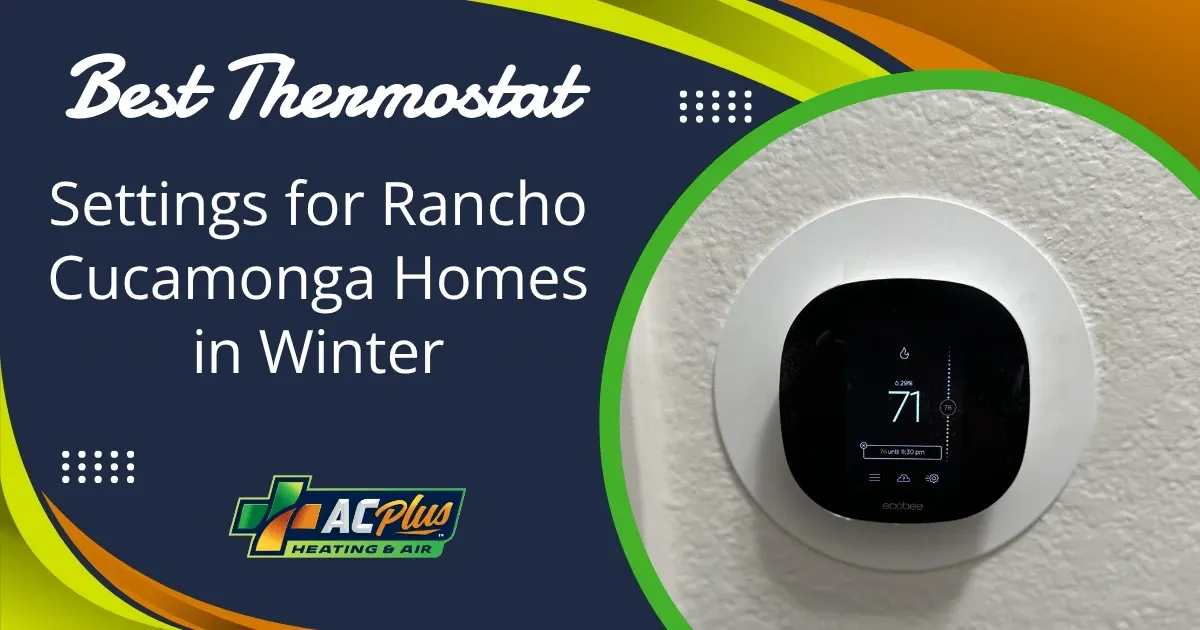
Best Thermostat Settings for Rancho Cucamonga Homes in Winter

Winter in Rancho Cucamonga is mild compared to the mountains, but it still catches people off guard. Overnight lows near the foothills can dip into the 30s and 40s, and a cold, dry Santa Ana pattern can make a 62-degree afternoon feel colder than the number suggests. The right thermostat settings keep your home comfortable without a shock when the gas or electric bill arrives.

At AC Plus Heating & Air Conditioning, we have been serving Rancho Cucamonga and helping Inland Empire families dial in their comfort since 1998. Here is what we recommend for winter settings, and why.

Need help programming your thermostat or upgrading your controls? Contact us online or call (951) 783-3745 to schedule thermostat service with our local team.

What Is the Best Thermostat Setting for Winter in Rancho Cucamonga?

For most homes, the best starting point is 68°F while you are home and awake. The U.S. Department of Energy suggests this temperature as a balance between comfort and efficiency. If 68°F feels too cool, raise it one degree at a time rather than jumping several degrees at once.

Every degree you raise the thermostat in winter adds to your heating costs. In a region where heating season is shorter than in colder states, small adjustments still add up over December through February. Treat 68°F as a baseline and adjust to your household’s needs.

What Should I Set the Thermostat to at Night and When I Am Away?

Lowering the temperature while you sleep or leave the house is one of the easiest ways to save energy. Here is a simple schedule that works for most Rancho Cucamonga households:

  • Morning (wake-up): 68°F
  • Daytime (away at work or school): 62°F to 65°F
  • Evening (home): 68°F
  • Overnight (sleeping): 62°F to 66°F

Most people sleep comfortably in a cooler room with warm bedding. Lowering the setting by about 7 to 10 degrees for eight hours a day can reduce annual heating costs noticeably, according to the Department of Energy.

Avoid setting the thermostat below 60°F, even when you travel. Very cold interiors can stress plumbing in unusually chilly snaps, and recovering the temperature takes longer and puts extra demand on your equipment.

Do Thermostat Settings Change for a Heat Pump vs. a Furnace?

Yes, and this is where many homeowners make costly mistakes. The two systems behave differently, so the strategy should too.

Gas furnace: Furnaces produce a lot of heat quickly, so larger overnight and daytime setbacks work well. Your system can recover from 63°F to 68°F in a reasonable amount of time.

Heat pump: Heat pumps deliver heat more gradually. Large setbacks can cause the system to run for a long stretch to catch up, or trigger the backup electric resistance heat, which is far more expensive to run. For a heat pump, limit setbacks to 2 to 4 degrees unless you have a smart thermostat built for heat pumps.

If you see “Emergency Heat” or “Aux Heat” appear on your thermostat for long periods, that is a sign something needs attention. Our team can check whether the issue is a settings problem or a mechanical one that needs heat pump repair.

Why Does My Home Feel Cold Even When the Thermostat Is Set Correctly?

A thermostat shows the air temperature, not how warm you feel. Several local conditions can make a properly set home feel chilly:

  • Low humidity: Dry Santa Ana conditions pull moisture from the air and from your skin, which makes the same temperature feel cooler. Indoor humidity between 30 and 50 percent is the comfortable range.
  • Air leaks and poor insulation: Older homes in the area often have drafty windows, gaps around doors, and attic insulation that has settled over the years.
  • Duct problems: Leaky or poorly sealed ducts in an attic lose heat before it reaches your rooms.
  • Dirty filters: A clogged filter restricts airflow and makes rooms feel uneven.
  • Thermostat location: A thermostat in direct sun or near a drafty hallway reads the wrong temperature and sends the wrong signal to your system.

Last winter, a family near the foothills in Rancho Cucamonga called us because their upstairs bedrooms never warmed up, even with the thermostat set to 72°F. The cause was not the furnace. It was a disconnected duct in the attic leaking warm air into the insulation. Once it was repaired, they dropped the setting to 68°F and stayed more comfortable than before.

Should I Use a Programmable or Smart Thermostat in Winter?

If you still adjust your thermostat by hand, a programmable or smart thermostat can help you stick to an efficient schedule without thinking about it. Smart thermostats go further by learning your routine, adjusting based on whether anyone is home, and letting you change settings from your phone on the drive back from the I-10 or I-15.

Look for these features if you are shopping:

  • Compatibility with your system, especially heat pumps
  • Multi-stage scheduling for mornings, evenings, and weekends
  • Remote access through a phone app
  • Filter change and maintenance reminders
  • Energy usage reports

AC Plus offers smart thermostat installation for both furnaces and heat pumps, so it is configured correctly from day one. Schedule trusted heating and cooling service with AC Plus Heating & Air Conditioning.

How Can I Save Money on Heating Without Sacrificing Comfort?

Thermostat settings are only one part of the picture. These steps make your settings work harder for you:

  1. Change your air filter every one to three months during heavy use.
  2. Open south-facing curtains on sunny days and close them at dusk to hold in heat.
  3. Seal visible gaps around windows, doors, and attic hatches.
  4. Use ceiling fans in reverse (clockwise) on low to push warm air down from the ceiling.
  5. Keep vents clear of furniture, rugs, and boxes.
  6. Schedule a seasonal tune-up before the first cold snap.

If your electricity plan uses time-of-use pricing, run your system a little warmer before the evening peak window and let the temperature coast down slightly during peak hours. Check your utility’s rate schedule to confirm when those hours apply.

How Do I Know When My Heating System Needs Professional Help?

Thermostat settings can only do so much if the equipment is struggling. Call a professional if you notice any of the following:

  • The system runs constantly but never reaches the set temperature
  • Rooms heat unevenly or some vents blow cold air
  • The furnace short cycles, turning on and off in quick bursts
  • You hear banging, squealing, or rattling from the unit
  • Your heating bills jump without a change in your habits
  • The thermostat screen is blank, unresponsive, or showing inconsistent readings

Ignoring these signs can turn a simple repair into a full system failure on the coldest night of the year. Need same-day AC or furnace repair? Contact AC Plus now.

Frequently Asked Questions About Winter Thermostat Settings

Is it cheaper to leave the heat on all day or turn it down when I leave?

Turning it down while you are away is generally cheaper because your home loses less heat over time. The exception is a heat pump, where very large setbacks can trigger costly backup heat.

What temperature should I set my thermostat to when I go on vacation?

Set it between 60°F and 62°F. That protects your home and plumbing without wasting energy.

Does setting the thermostat higher heat my home faster?

No. Your system heats at the same rate regardless of the target. A higher setting only makes it run longer and can overshoot your comfort level.

How often should my thermostat be replaced?

Many last 10 years or more, but older models can lose accuracy. If your readings seem off, have it tested or replaced.

Stay Comfortable All Winter with AC Plus

For more than two decades, families across Southern California have trusted AC Plus Heating & Air Conditioning for dependable comfort. Whether you need help choosing the right settings, a new smart thermostat, or a full system tune-up, our licensed technicians offer upfront pricing and same-day service. Call AC Plus Heating & Air Conditioning in Rancho Cucamonga today for reliable HVAC service, and see why your neighbors choose AC Plus.

Spring Allergies and Indoor Air Quality: How To Keep Your Home Healthy

Spring in Victorville, CA, brings a vibrant bloom of colorful desert wildflowers, but it also comes with abundant pollen from oak and juniper trees. Pollen and other particles can easily infiltrate your home’s HVAC system, circulating throughout air ducts and making seasonal allergy symptoms worse.

With regular HVAC maintenance, duct cleaning, and duct sealing services, AC Plus Heating and Air helps Victorville residents enjoy the desert spring blooms and healthier indoor air quality.

AC Plus comfort

The Connection Between Spring Allergies and Indoor Air Quality

Spring often triggers increased allergy symptoms for those sensitive to pollen and other particles. These particles enter homes through ventilation systems and other unsealed entry points, especially as the weather warms, humidity increases, and homeowners open their windows.

Along with mold or dust already in your system, these particles accumulate and circulate throughout your home via HVAC air ducts, exacerbating allergy symptoms and making it harder to breathe.

Symptoms associated with poor indoor air quality in the spring include:

  • Sneezing and congestion
  • Itchy and watery eyes
  • Coughing and throat irritation
  • Wheezing or shortness of breath
  • Headaches
  • Poor sleep and increased fatigue

Common Indoor Air Pollutants in Spring

Spring amplifies the presence of many airborne pollutants in your home, such as:

  • Pollen: Pollen can enter through unsealed locations or by settling on clothing, shoes, and pets.
  • Mold spores: Mildew and mold may develop in air ducts, especially if they’re poorly sealed and exposed to organic matter. Excessive condensation from inefficient HVAC operation or high indoor humidity may also encourage mold growth.
  • Dander and dust: These microscopic particles come from household members, pets, and dust mites and may remain airborne for extended periods.
  • Volatile organic compounds: Household cleaners, pesticides, and other products release VOCs as gases.
  • Bacteria and viruses: Increased HVAC use may circulate bacteria and viruses. Frequent sneezing and nose-blowing also contribute to airborne droplets carrying pathogens.

duct cleaning

Benefits of Duct Cleaning and Sealing

Air ducts carry air from your HVAC system to various rooms throughout your home, then return it for air conditioning or heating. A properly designed and maintained ductwork system supports healthy indoor air quality.

Duct cleaning removes built-up contaminants inside your air ducts, while duct sealing addresses leaks that allow unfiltered air to enter the system. These services provide several advantages for your indoor air quality and comfort.

Promotes Healthier Indoor Air

By removing built-up pollutants in your ductwork, regular duct cleaning prevents particles from recirculating throughout your home and causing or exacerbating allergy symptoms. Cleaning also prevents contaminants that may contribute to unpleasant odors, helping your indoor environment feel and smell fresher.

Blocks Pollutants

Ductwork often runs through attics, basements, and other areas that may not be fully sealed from outdoor air. Cracks, gaps, or loose joints in ducts may allow this unfiltered air to enter and introduce pollen, mold spores, and other allergens to the system.

Prevents Mold Growth

High humidity or organic debris within air ducts promotes mold growth and bacteria. Regular duct cleaning removes debris that sustains these pollutants, while sealing reduces moisture levels, limiting mold development.

Reduces Dust on Surfaces

Poor indoor air quality causes dust to accumulate more quickly on surfaces throughout your home. By reducing the amount of airborne particles, duct maintenance means you won’t have to clean surfaces as frequently.

Enhances HVAC Energy Efficiency

Dirty and leaking ducts cause your system to work harder to cool or heat your home by restricting proper airflow. Dust and other debris can also coat important HVAC components, such as the evaporator coil, and impede performance. Cleaning and sealing restore airflow and HVAC efficiency to reduce your household’s energy consumption and utility bills.

Extends HVAC System Service Life

Efficient HVAC systems experience less wear and tear. Clean and sealed ducts promote efficiency and reduce strain to prevent breakdowns and extend your HVAC system’s operating life.

How a Spring AC Tune-Up Can Help

An AC tune-up in the spring prepares your system for higher air conditioning demand ahead of peak summer heat. HVAC technicians inspect, clean, and adjust HVAC components to optimize their performance. A tune-up includes:

  • Replacing dirty or clogged air filters.
  • Checking refrigerant levels.
  • Cleaning dust coils and other parts.
  • Checking for mold or moisture issues.

Professional air conditioning maintenance also identifies minor issues before they escalate to bigger problems and breakdowns during peak demand. Tune-ups support your HVAC system’s airflow, filtration, and overall efficiency to optimize indoor air quality.

Improving Energy Efficiency With Regular Maintenance

Pollen, mold, and dust accumulation in your ductwork and HVAC system affect the performance and efficiency of numerous components.

Clogged air filters, obstructed ducts, and air leaks restrict airflow. Poor airflow means your system must work harder and for longer periods to circulate air and maintain the desired temperature. It also impedes the evaporator coil’s heat exchange process, especially if it’s coated in accumulated debris.

Regular maintenance addresses these inefficiencies to restore optimal system performance. Duct sealing may help offset up to 30% of energy loss from ductwork gaps and holes. By preventing unnecessary strain, maintenance helps prevent premature system wear and failure and contributes to overall reduced energy consumption and long-term savings.

Schedule Duct Cleaning and Sealing With AC Plus in Victorville, CA

An efficient HVAC system and cleaner ducts allow you to enjoy relief from spring allergens and other contaminants. Include ductwork in your spring cleaning schedule with HVAC and duct maintenance services from AC Plus Heating and Air. Contact us or schedule online to book a spring AC tune-up and optimize your HVAC system’s efficiency before the summer heat kicks in.

How To Control Humidity

Controlling humidity levels in your home is vital for creating a comfortable and healthy living environment. Humidity affects your comfort and plays a significant role in preserving your belongings and preventing potential health issues. In this article, we will explore the importance of maintaining proper humidity and effective ways to control it.

At AC Plus Heating & Air, we leverage state-of-the-art technology, such as dehumidifiers, to control humidity in Redlands, CA and restore comfort in your living spaces.

Understanding Proper Humidity Levels

To create a comfortable living space, achieving the ideal humidity level in your home is important. The recommended humidity to maintain indoor air quality ranges between 30% to 50%. Going below 30% can cause dryness, while levels above 50% can lead to excess moisture and various related problems.

The Impact Of High And Low Humidity

Contrary to many opinions, humidity is a necessary component for home comfort. Different seasons can cause high and low humidity outdoors, and it is important homeowners take action to maintain a level between 30-50%. Below we have discussed the impact of both high and low humidity in homes.

High Humidity

Excessive humidity can harm your home, personal belongings, and health. It promotes the growth of mold and mildew, resulting in musty odors and potential structural damage. Paint may peel, wallpapers may bubble, and wood may warp. Furthermore, high humidity creates an ideal environment for dust mites, triggering allergies and respiratory issues.

Low Humidity

Less humidity can be equally problematic. In dry environments, moisture is drawn from surfaces and materials, leading to cracks in furniture, musical instruments, and wooden floors. Additionally, low humidity can cause dry skin, irritated eyes, and respiratory discomfort.

The Importance Of Maintaining Proper Humidity

Ensuring your home remains at an appropriate humidity level can present various advantages. Below we have listed three benefits of controlling humidity in Rancho Cucamonga, CA and surrounding areas.

  • Comfort: Balanced humidity creates a pleasant and comfortable indoor atmosphere, preventing the discomfort of dryness or excessive moisture.
  • Health: Optimal humidity helps alleviate respiratory issues, such as allergies, asthma, and dry nasal passages. It also reduces the transmission of airborne viruses and bacteria, promoting overall wellness.
  • Preservation: Proper humidity helps safeguard your valuable possessions. It prevents wooden furniture, books, artwork, and musical instruments from warping, cracking, or deteriorating due to excess moisture or dryness. Additionally, controlling humidity prevents mold and mildew growth on personal belongings.

5 Disadvantages Of Not Controlling Humidity In Your Home

Humidity plays a significant role in maintaining a comfortable and healthy living environment. Failing to control humidity levels in your home can lead to a range of disadvantages that affect your well-being and your property’s condition. Let’s explore five disadvantages of not controlling humidity in Rancho Cucamonga, CA and surrounding areas:

  • Mold and Mildew Growth
  • Damage to Personal Belongings
  • Comfort Issues
  • Increased Energy Consumption
  • Structural Damage

Mold and Mildew Growth

Excess moisture in the air provides an ideal breeding ground for mold and mildew. These fungal growths can thrive on various surfaces, such as walls, ceilings, and furniture. Not only do they cause unpleasant odors, but they can also damage the structural integrity of your home. Mold and mildew can trigger allergies and respiratory issues, posing health risks to you and your family.

Damage to Personal Belongings

Items in your home, such as wooden furniture, books, artwork, and musical instruments, are especially susceptible to damage when exposed to high or low humidity levels. Excessive moisture can lead to warping, rotting, and decay, while excessively dry conditions can cause cracking, splitting, and loss of structural integrity. These damages can be irreversible and lead to costly repairs or replacements.

Comfort Issues

Improper humidity levels can greatly impact your comfort. The air feels heavy and clammy in high humidity, increasing discomfort and making it difficult to cool down. Excessive moisture can also make it harder for your body to regulate its temperature, leading to feelings of stickiness and excessive perspiration. On the other hand, low humidity can cause dry skin, chapped lips, and respiratory discomfort, making breathing challenging.

Increased Energy Consumption

When humidity levels are not properly controlled, it can affect the efficiency of your heating, ventilation, and air conditioning (HVAC) systems. In high humidity, air conditioning units must work harder to control humidity in the air, consuming more energy and leading to higher electricity bills. Conversely, heating systems may need to run for longer periods in low humidity to compensate for the dryness, further increasing energy consumption.

Structural Damage

Too much or too little humidity can have long-term effects on the structural integrity of your home. Prolonged exposure to high humidity levels can cause wood, drywall, and plaster to absorb moisture, leading to swelling, warping, and potential structural damage. This can compromise the stability of your walls, floors, and ceilings, necessitating extensive repairs.

Neglecting to control humidity levels in your home can result in various disadvantages. From the growth of mold and mildew to damage to personal belongings, discomfort, increased energy consumption, and structural damage, the consequences can be far-reaching. It is crucial to prioritize humidity control to maintain a healthy, comfortable, and well-preserved living space.

Why Call AC Plus Heating & Air To Control Humidity?

Hiring AC Plus Heating & Air to control humidity in your home has many benefits. When you choose AC Plus Heating & Air, you gain access to their expertise and specialized dehumidifiers and humidifiers, ensuring optimal humidity levels and creating a comfortable and healthy living space. Below we have listed four advantages of hiring a local HVAC company in Redlands, CA like AC Plus to control humidity.

  • Professional Guidance
  • High-Quality Systems
  • Energy Efficiency
  • Peace Of Mind

Professional Guidance

AC Plus Heating & Air provides professional guidance and advice on maintaining proper humidity levels in your home. They understand the unique needs of different spaces and offer tailored solutions to meet your specific requirements.

High-Quality Systems

AC Plus Heating & Air offers high-quality dehumidifiers and humidifiers designed to remove or add moisture efficiently to your home. Both dehumidifiers and humidifiers effectively combat humidity-related issues, such as mold growth and dryness, while protecting your valuable belongings from damage.

At AC Plus Heating & Air, our team can provide quality dehumidifiers and humidifiers in Redlands, CA that benefit homeowners in the following ways:

  • Efficient Moisture Extraction/Insertion: AC Plus dehumidifiers employ advanced technology to efficiently remove or add moisture, ensuring optimal humidity levels.
  • Customizable Settings: Many systems offer customizable settings, allowing you to adjust humidity levels according to your preference and specific requirements.
  • Intelligent Operation: Many AC Plus Heating & Air humidifiers and dehumidifiers in Redlands, CA have smart features like humidity sensors and timers, ensuring automated and convenient operation.

Energy Efficiency

AC Plus Heating & Air prioritizes energy efficiency in its dehumidifiers and humidifiers. By choosing their services, you can benefit from using energy-efficient equipment, which helps reduce your utility bills while effectively controlling humidity levels in your home.

Peace of Mind

When you hire AC Plus Heating & Air, you can enjoy peace of mind knowing that professionals are handling your humidity control needs. Their expertise and reliable solutions ensure a comfortable and healthy living environment, free from the negative effects of high or low humidity.

By entrusting AC Plus Heating & Air with your humidity control requirements, you can experience the advantages of their professional guidance, high-quality dehumidifiers and humidifiers, energy efficiency, and the reassurance of optimum indoor air quality.

Call AC Plus Heating & Air For Dehumidifiers And Humidifiers In Rancho Cucamonga, CA!

Maintaining proper humidity levels in your home is essential for your comfort, protecting your belongings, and promoting good health. AC Plus Heating & Air dehumidifiers can be your reliable partner in achieving optimal humidity levels, making your home a haven of comfort and well-being. Remember, finding the right balance in humidity is key. Embrace the power of proper humidity with AC Plus and enjoy the benefits of a comfortable, healthy, and well-preserved home.

What Causes Poor Indoor Air Quality?

Maintaining positive indoor air quality is important for a variety of reasons, such as your health and home comfort. Many experience seasonal allergies due to pollen and other sources, and indoor pollutants typically make symptoms worse. To be able to improve your home’s air quality, it is helpful to know what pollutants are impacting your allergies. In this blog, we discuss indoor air quality in Redlands, CA and common home allergens.

Why Is Indoor Air Quality Important?

Indoor air quality refers to the condition of your home’s air whether negative or positive. Many homeowners are unaware of the potential pollutants they are breathing in their home and how the allergens could be affecting their bodies. Not only does poor indoor air quality risk your health, but it can also cause discomfort and damage to your home depending on certain factors. While air quality is measured by pollutants in the air, it is also related to humidity levels. Too much or too little humidity can have negative impacts such as mold growth, which adds another pollutant to your home’s air. However, the technicians at AC Plus are here to help with our various indoor air quality services in Redlands, CA and surrounding areas, such as:

  • Air Quality Testing
  • Air Purifier Installation
  • UV Light Installation
  • Humidifier & Dehumidifier Services
  • Air Scrubbing
  • Duct Cleaning
  • And more!

Common Indoor Pollutants In California

Did you know that indoor air is often more polluted than outdoor air? This is often due to lack of ventilation inside homes. It is important for homeowners to be aware of the common indoor air pollutants they could be breathing inside their homes. Below we have listed common indoor air pollutants in the state of California according to Los Angeles Public Health.

  • Tobacco Smoke
  • Combustion Pollutants
  • Formaldehyde
  • Lead
  • Pesticide
  • Radon
  • Asbestos

How To Improve Indoor Air Quality

Many spend a large part of their days inside their home, whether you are sleeping, working, or escaping the uncomfortable winter and summer temperatures. This means some homeowners and residents are breathing their home air for 8+ hours. With that being said, do you know exactly what you are breathing and how it is impacting your health? Taking proper steps to improve your home’s air quality is necessary to keep you and other residents in your home healthy, especially during allergy season. Below we have listed four ways to improve indoor air quality in Victorville, CA and surrounding areas.

  • Perform Air Quality Testing
  • Install Beneficial Air Quality Devices
  • Regularly Change Air Filters
  • Schedule Duct Cleaning

Perform Air Quality Testing

It is important to know what allergens are floating throughout your home, because it can help take action to remove negative pollutants. At AC Plus, we offer indoor air quality testing in Victorville, CA and a variety of surrounding communities. Indoor air quality tests measure the air for specific allergens, such as mold, radon, and other pollutants. Depending on the space, our team will use a variety of tools to identify which allergens are floating throughout your home and negatively impacting your health. It is helpful to narrow down the pollutants inside your home, because our professional technicians can proceed with the best solution to improve air quality. Give us a call to schedule indoor air quality testing for your home this spring!

Install Beneficial Air Quality Devices

Once we have performed an indoor air quality test and identified which allergens are inside your home, an AC Plus technician will likely suggest a home device to benefit air quality. Below are home devices that can help improve indoor air quality.

Dehumidifier: If your home has allergens such as mold, it could likely be due to high humidity. Mold and mildew thrive in warm and moist environments and could be growing due to the humidity levels inside your home. Dehumidifying systems work to remove excess moisture in your home to protect your health and personal items. Too much moisture can affect electronics, books, and wood flooring/furniture.

Humidifier: Your home should remain between 30-50% humidity to keep you healthy and your home protected from damage. Homeowners often believe humidity is solely a hot and sticky feeling, but humidity is actually necessary for good indoor air quality and comfort. Due to Victorville, CA and surrounding areas being mostly a dry, desert like climate, many homes can lack moisture. Humidifying systems add moisture back into the air to benefit your health and prevent symptoms such as cracked skin and dry throats.

Air Purifier: Air purifiers work to remove pollutants from the air and keep your home healthy. The device pulls in unwanted pollutants, runs them through a filter, and produces purified air back into your home. While air purifiers can help most homeowners, the device is especially beneficial to those who currently struggle with respiratory illnesses.

UV Light: UV lights are beneficial to air quality, because the device removes allergens such as mold and bacteria. The device produces ultraviolet rays that kill harmful pollutants and keep you breathing clean air.

Regularly Change Air Filters

Maintaining clean air filters is one of the easiest ways to improve your home’s air quality. The square footage of your home determines the amount of air filters your home will utilize. Air filters are placed inside intake vents and sometimes in your HVAC unit. The purpose of the air filter is to catch pollutants before air is distributed into your home. If the filter pores are dirty, it will struggle to catch each pollutant that passes through. Dirty air filters can result in poor air quality and an overworked HVAC unit. We recommend changing filters in your home at least every 90 days.

Schedule Duct Cleaning

If your home utilizes air ducts, they will need to be cleaned from time to time. Air frequently passes through your air ducts to be distributed throughout your home, and pollutants can build up over time. Allergens such as dust and pet dander can settle in your ductwork and be picked up by air passing through. These pollutants enter your home and negatively impact your air quality and health. At AC Plus, we offer professional duct cleaning services in Redlands, CA and surrounding areas. Not only does duct cleaning improve air quality, but also:

  • Removes Odors
  • Creates A Cleaner Living Environment
  • Improves Airflow Efficiency

We are here to help you and your family breathe easy year-round, and especially during allergy season! Let an expert AC Plus technician help improve your indoor air quality in Victorville, Redlands, and Cucamonga, California and surrounding areas this spring season!

×
js_loader