


Aeroseal Duct Sealing across Southern California
Reasons to Choose AC Plus
-

Highly rated by our customers with 3,000+ 5-star reviews
-
Fair pricing with affordable financing options available
-
Fully stocked trucks to ensure timely repairs
-
Free estimates for system replacement or installation
-
Industry leading warranties and guarantees

There’s no fuss with the plus! Our team of heating & air conditioning professionals are ready to help. To schedule your service, give us a call at (760) 243-4440.
Your heating and cooling equipment may be working properly while conditioned air escapes before reaching your rooms. Small gaps, poorly sealed joints, and hidden openings in the ductwork can allow heated or cooled air to leak into attics, crawl spaces, garages, and wall cavities.
AC Plus Heating & Air Conditioning provides Aeroseal duct sealing across Southern California to address leaks from inside the duct system. This technology can reach openings that are difficult or impractical to seal by hand, helping improve airflow, temperature consistency, and overall HVAC performance.
Our family-owned and operated company has served Southern California since 2001. We help homeowners in the Inland Empire, High Desert, and surrounding communities understand where their duct systems are losing air and whether Aeroseal is an appropriate solution.
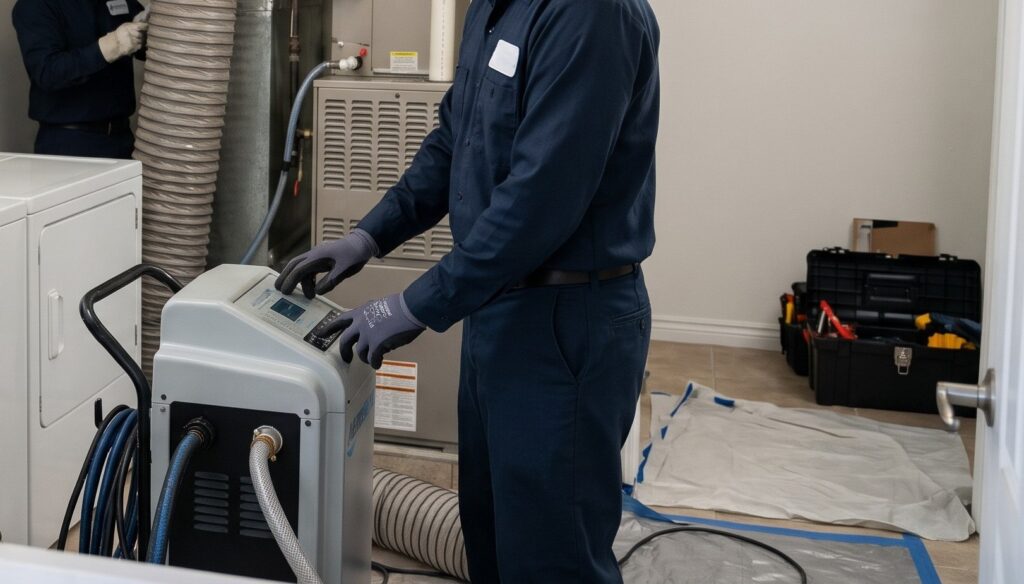
What Is Aeroseal Duct Sealing?
Aeroseal is a computer-controlled process that seals duct leaks from the inside. Instead of requiring technicians to open walls or manually reach every duct connection, the process circulates aerosolized sealant through a temporarily pressurized duct system.
As air escapes through small openings, sealant particles collect around the edges of those leaks. Additional particles attach to the developing seal until the opening closes. The process targets leaks rather than coating the entire interior surface of the ductwork.
Aeroseal can help seal:
- Leaking duct joints
- Small holes in ductwork
- Gaps around fittings
- Poorly sealed connections
- Hidden leaks inside walls or ceilings
- Openings in difficult-to-access duct runs
The technology is intended for air leakage, not major structural duct damage. Crushed, collapsed, disconnected, or severely deteriorated ducts may require physical repair or replacement before sealing.
Why Do Leaking Air Ducts Matter in Southern California?
Southern California HVAC systems must operate under demanding conditions. Air conditioners run heavily during hot Inland Empire and High Desert summers, while furnaces and heat pumps provide warmth during cold desert nights and winters near the San Bernardino Mountains.
If ductwork leaks, some of the conditioned air never reaches the living space. The HVAC system may run longer to compensate, placing additional demand on its components.
Leaking ducts can contribute to:
- Hot and cold rooms
- Weak airflow from certain vents
- Long heating or cooling cycles
- Difficulty reaching the thermostat setting
- Higher energy consumption
- Excess dust inside the home
- Premature HVAC wear
- Uncomfortable second floors or distant rooms
- Air being pulled from attics, garages, or crawl spaces
A leak may be hidden from view, but its effects can often be felt. A bedroom that never cools properly, for example, may not have an undersized air conditioner. The duct serving that room could be losing air before it reaches the register.
Schedule Aeroseal duct sealing with AC Plus Heating & Air Conditioning to find and address hidden air loss in your home.
How Can You Tell if Your Ductwork Is Leaking?
Because most ductwork is concealed, homeowners cannot always identify a leak visually. Performance changes throughout the home often provide the clearest warning.
You may benefit from a professional duct evaluation if:
- One or more rooms remain uncomfortable
- Airflow varies significantly between vents
- Your HVAC equipment runs for unusually long periods
- Energy costs have increased
- Dust returns soon after cleaning
- Ductwork passes through an attic, garage, or crawl space
- The ducts are older or have undergone previous repairs
- You hear rattling, whistling, or rushing sounds
- A new HVAC system still provides uneven comfort
- Renovations may have disturbed existing ducts
Not every airflow problem comes from leakage. Dirty filters, blower malfunctions, undersized ducts, closed dampers, and poorly balanced systems can create similar symptoms. That is why testing and professional diagnosis should come before sealing.
How Does the Aeroseal Process Work?
Aeroseal duct sealing follows a controlled process designed to measure leakage, apply the sealant, and verify the improvement.
1. Inspecting the Duct System
A technician first evaluates accessible ductwork and looks for major damage. Large separations, collapsed sections, or other physical defects may need manual repair before the Aeroseal process begins.
2. Preparing the Home
Supply and return registers are temporarily covered. The heating and cooling equipment is isolated from the duct-sealing process to protect sensitive internal components.
3. Measuring Initial Leakage
The duct system is connected to specialized equipment and pressurized. This establishes the initial leakage rate and provides a baseline for measuring the results.
4. Applying the Sealant
An aerosolized, water-based sealant is introduced into the isolated duct system. The pressurized air carries the particles toward leaks, where they collect around the openings and form seals.
5. Monitoring Progress
Computer-controlled equipment tracks the changing leakage rate during the application. This allows the technician to monitor sealing progress rather than relying on guesswork.
6. Verifying the Results
After application, the system is tested again. A report compares the before-and-after leakage levels, giving the homeowner measurable documentation of the work performed. Aeroseal describes this as an internally applied sealing process that concludes with a detailed report verifying the reduction in leakage.
7. Restoring the System
Register coverings and temporary connections are removed. The HVAC system is returned to normal operating condition and checked for proper airflow.
What Are the Benefits of Aeroseal Duct Sealing?
The exact outcome depends on the condition and design of the duct system. When leakage is a significant source of performance loss, sealing may provide several benefits.
More Consistent Indoor Comfort
More conditioned air can reach the intended rooms. That may reduce hot and cold spots and improve comfort in bedrooms, upstairs spaces, additions, or rooms far from the air handler.
Improved HVAC Performance
An air conditioner, furnace, or heat pump cannot perform as designed if a significant amount of its airflow escapes. Sealing leaks helps the system deliver conditioned air more effectively.
Potential Energy Savings
Reducing wasted airflow may allow the system to satisfy the thermostat setting with less unnecessary runtime. Actual savings vary with duct leakage, equipment efficiency, insulation, thermostat settings, and household habits.
Reduced Dust Infiltration
Leaky return ducts can pull dust and other particles from unconditioned areas. Sealing these openings may help reduce that pathway, although duct sealing is not a replacement for proper filtration or source control.
Less Strain on HVAC Equipment
Long cycles caused by air loss can increase wear on blowers, motors, compressors, and other components. Improving duct performance can help the equipment operate under more appropriate conditions.
Access to Hidden Leaks
Traditional sealing is highly effective when technicians can reach the affected ducts. Aeroseal is particularly useful for small leaks in concealed or difficult-to-access areas.
Is Aeroseal Better Than Manual Duct Sealing?
Aeroseal and manual sealing are complementary services rather than competing solutions. The right approach depends on the type and location of the damage.
Manual sealing is generally useful for:
- Large visible gaps
- Disconnected duct sections
- Crushed or torn flexible ducts
- Accessible joints
- Damaged insulation
- Sections requiring replacement
Aeroseal is well suited for:
- Numerous small leaks
- Hidden duct joints
- Inaccessible sections
- Leakage spread throughout the system
- Projects requiring measured before-and-after results
Some homes benefit from a combination of physical duct repairs and internal aerosol sealing. AC Plus can inspect the system and recommend the approach that addresses the actual problem.
Is Aeroseal the Same as Air Duct Cleaning?
No. Aeroseal sealing and duct cleaning solve different problems.
Duct cleaning removes qualifying debris or contaminants from inside the duct system. Aeroseal closes small air leaks that allow conditioned air to escape or unfiltered air to enter. Sealing does not remove accumulated material, and cleaning does not automatically close gaps.
A homeowner may need one service, both services, or neither. The recommendation should be based on the condition of the system rather than a one-size-fits-all package.
Can Duct Sealing Improve Indoor Air Quality?
Duct sealing may support cleaner indoor air by reducing the amount of unconditioned air drawn into the system through return-side leaks. Depending on where the ducts are located, that unwanted air may contain attic dust, insulation particles, garage fumes, or outdoor contaminants.
However, duct sealing is only one part of an indoor air quality strategy. A complete approach may also include:
- Correctly sized HVAC filters
- Regular filter replacement
- Whole-home air purification
- Humidity management
- Source control
- Appropriate ventilation
- HVAC maintenance
- Professional duct cleaning when justified
AC Plus offers indoor air quality assessments and can recommend solutions based on your home, comfort concerns, and existing HVAC system.
Why Choose AC Plus Heating & Air Conditioning?
The effectiveness of duct sealing depends on proper system evaluation, careful preparation, and accurate testing. AC Plus combines Aeroseal technology with decades of heating, cooling, ductwork, and indoor air quality experience.
Homeowners choose our team for:
- Family-owned and operated service
- Southern California experience since 2001
- Licensed and certified HVAC technicians
- Clear explanations and upfront pricing
- Professional duct inspections
- Measured sealing results
- Same-day service when available
- Whole-home comfort and air quality solutions
- Financing options for qualifying improvements
- Service throughout the Inland Empire and High Desert
We serve homeowners in Rancho Cucamonga, Victorville, Apple Valley, Redlands, Wrightwood, San Bernardino, Riverside, Ontario, and other Southern California communities.
Contact AC Plus Heating & Air Conditioning today to request an Aeroseal duct sealing evaluation.
Frequently Asked Questions About Aeroseal Duct Sealing
How long does Aeroseal duct sealing take?
Many residential applications can be completed within several hours, but the exact timeline depends on the size, design, accessibility, and condition of the duct system. Physical repairs may add time to the project.
Will Aeroseal seal every duct problem?
No. Aeroseal is designed to close small air leaks. Disconnected, collapsed, crushed, or severely damaged ducts require manual repair or replacement.
Do technicians need to open my walls?
The process can seal many hidden leaks from inside the ducts, often avoiding the need to open walls or ceilings. However, access may still be necessary when the system has significant physical damage.
Will the process show whether the sealing worked?
Yes. Leakage is measured before and after application. Homeowners receive documentation showing the change in duct leakage.
Can new ductwork leak?
Yes. Leakage can occur at joints, fittings, boots, plenums, and equipment connections, even in relatively new systems. Testing is the most reliable way to determine how airtight a duct system is.
Should I replace my HVAC system before sealing the ducts?
That depends on the project. When installing new heating or cooling equipment, evaluating the ducts at the same time can help the new system perform properly. If replacement is not currently necessary, sealing may still improve the performance of existing equipment.
Schedule Aeroseal Duct Sealing Across Southern California
Leaking ducts can quietly waste conditioned air, create uneven temperatures, and make reliable HVAC equipment work harder than necessary. Aeroseal offers a measured, minimally invasive way to seal many of those hidden openings from inside the duct system.
AC Plus Heating & Air Conditioning can inspect your ductwork, identify major damage, measure leakage, and determine whether Aeroseal is right for your home. We will clearly explain our findings and provide an upfront recommendation based on the condition of your system.
Schedule trusted Aeroseal duct sealing with AC Plus Heating & Air Conditioning and start getting more from the air your HVAC system already produces.
Service Request
"*" indicates required fields
