

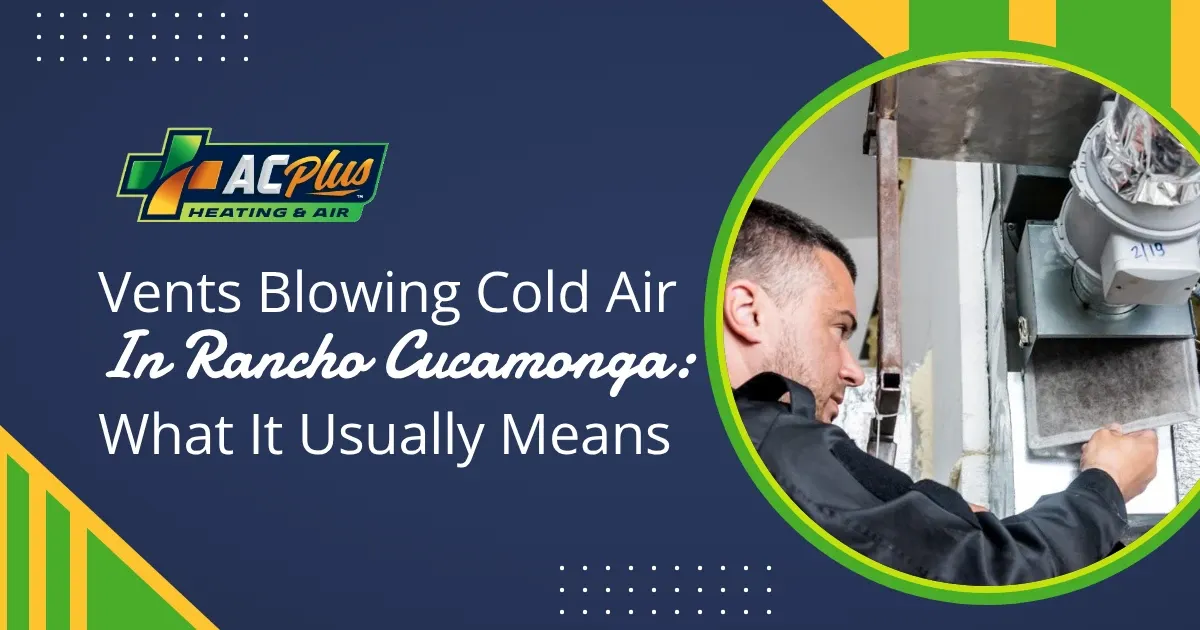
When you turn on the heat, you expect warm air from the vents. If the airflow feels cool or completely cold, the cause could be as simple as a thermostat setting—or it could indicate an ignition, airflow, ductwork, or heat pump problem that needs professional attention.
AC Plus Heating & Air Conditioning has been serving Rancho Cucamonga and surrounding Southern California communities since 1998. Our family-owned and operated team diagnoses heating problems involving furnaces, heat pumps, thermostats, air handlers, and ductwork.
Understanding when cool air is normal and when it signals a malfunction can help you protect your comfort and avoid unnecessary equipment damage.
Get reliable heating repair in Rancho Cucamonga when your vents won’t blow warm air. Contact us online or call (951) 783-3745 to schedule service today.
Is It Normal for Vents to Blow Cool Air Sometimes?
Brief periods of cool or room-temperature airflow can be normal. The explanation depends on the heating system and when the cool air appears.
You might temporarily feel cool air when:
- A heating cycle is beginning
- The blower continues running after the burners shut off
- A heat pump enters defrost mode
- The thermostat fan is set to “on”
- Ductwork in an attic has cooled between cycles
- A heat pump is producing lower-temperature supply air than a furnace
The situation deserves attention if the air remains cold, the indoor temperature continues to fall, or the heating system repeatedly starts and stops without warming the home.
Why Do Heat Pumps Feel Different From Furnaces?
A gas furnace produces high-temperature heat through combustion. A heat pump transfers heat from outside, so its supply air often feels less hot even when the system works correctly.
During normal heat pump operation, air from the vents may feel mildly warm rather than hot. Because human skin is warmer than that supply air, the airflow can sometimes feel cool against your hand.
Instead of judging heat pump performance only by touch, consider whether:
- The indoor temperature is rising
- The system reaches the thermostat setting
- Airflow is consistent
- The outdoor unit is operating
- Auxiliary heat activates appropriately
- The system is free of error codes
- The equipment is not covered in persistent ice
If the home is getting colder despite continuous operation, the system likely needs service.
Could the Thermostat Be Set Incorrectly?
The thermostat is the first place to check. A simple setting can make an otherwise functional system circulate unheated air.
Confirm that:
- The mode is set to “heat”
- The selected temperature is above the room temperature
- The fan is set to “auto”
- Programmed schedules are correct
- Away or vacation settings are disabled
- Thermostat batteries are not weak
- A smart thermostat remains connected and responsive
When the fan is set to “on,” the blower may operate continuously—even when the furnace burners or heat pump compressor are off. That air can feel cool between heating cycles.
Changing the fan setting to “auto” allows the blower to operate primarily when the system is actively heating or cooling.
Can a Dirty Filter Cause Cold Air From the Vents?
Yes. A clogged filter restricts airflow through a furnace, heat pump, or air handler.
In a furnace, poor airflow may cause heat to build up inside the equipment. A safety limit switch can respond by shutting down the burners while the blower continues running to cool the system. The result is air from the vents without active heating.
A dirty filter may also cause:
- Weak airflow
- Furnace short cycling
- Longer heating cycles
- Unusual system noise
- Increased blower strain
- Higher energy use
- Uneven temperatures
- Heat pump performance problems
Inspect the filter and replace or clean it according to manufacturer guidance. If the system continues blowing cold air, another problem is present.
Why Would a Furnace Fail to Ignite?
A furnace may start its blower even if the burner does not remain lit. Several components are involved in a normal ignition sequence.
Possible problems include:
- A failed electronic igniter
- A dirty or faulty flame sensor
- Burner trouble
- An interrupted gas supply
- A malfunctioning gas valve
- A control-board problem
- A pressure-switch issue
- Venting or combustion-air restrictions
- A safety lockout
You may hear the furnace attempt to ignite several times before shutting down. Some systems display an error code or flashing diagnostic light.
Do not repeatedly reset the furnace or attempt to adjust gas components. Fuel-burning equipment requires professional diagnosis.
Can Furnace Overheating Cause Cold Air?
Yes. When a furnace overheats, a high-limit safety control may turn off the burners while allowing the blower to continue moving air. This protects the equipment by carrying away excess heat.
The air initially feels warm but may become cool after the burners shut down.
Common causes of overheating include:
- A clogged air filter
- Blocked supply registers
- Obstructed return grilles
- A failing blower motor
- Dirty internal components
- Damaged or undersized ductwork
- An oversized furnace
- A malfunctioning limit switch
Repeated overheating should never be treated as normal. It can place added stress on the furnace and indicate a serious airflow problem.
Could Leaking Ductwork Be Cooling the Air?
Duct leaks can allow heated air to escape before it reaches the rooms. They can also draw cold air from attics, garages, crawl spaces, or wall cavities into the distribution system.
Possible signs of duct leakage include:
- Some vents blow warmer air than others
- Rooms have large temperature differences
- Airflow is weak
- The system runs for long periods
- Heating costs have increased
- Dust or attic-like odors come from the vents
- Ducts are visibly disconnected or damaged
- Whistling or rattling occurs during operation
Rancho Cucamonga homes may have ductwork routed through attics that become cool during winter nights. Damaged insulation and air leaks can cause additional heat loss before air reaches the living space.
Why Is My Heat Pump Stuck in Cooling Mode?
A heat pump uses a reversing valve to change between heating and cooling. A valve, thermostat, wiring, or control problem may prevent the system from switching correctly.
Possible causes include:
- Incorrect thermostat configuration
- A reversing-valve problem
- Damaged control wiring
- A failed thermostat
- Control-board trouble
- Refrigerant-related issues
- An outdoor unit malfunction
Professional testing is necessary to determine whether the heat pump is actually stuck in cooling or simply producing air that feels less hot than furnace air.
What Is Heat Pump Defrost Mode?
During heating operation, moisture can freeze on the outdoor coil. The heat pump periodically enters defrost mode to melt that frost.
While defrosting, the system temporarily changes operation. Depending on the design, auxiliary heat may activate to prevent cool air from reaching the rooms.
A brief period of cooler airflow can be normal. A problem may be present if:
- Defrost cycles happen very frequently
- Cool air continues for a long time
- The outdoor unit develops heavy ice
- Auxiliary heat never activates
- The home loses temperature
- The system displays an error code
Do not use tools or hot water to remove ice. The coil and refrigerant tubing can be damaged easily.
Could Low Refrigerant Affect Heating?
A heat pump relies on a controlled amount of refrigerant to transfer heat. A leak or another refrigerant-related problem can reduce heating and cooling performance.
Possible signs include:
- Poor heating in winter
- Poor cooling in summer
- Long operating cycles
- Ice on equipment
- Unusual hissing sounds
- Rising electricity use
- Auxiliary heat running frequently
Refrigerant is not consumed like fuel. If the system is low, the cause should be identified rather than simply adding more refrigerant.
Can the Outdoor Heat Pump Unit Cause Cold Air?
Yes. The outdoor unit is essential during heat pump operation. If its compressor or fan does not run, the indoor blower may continue circulating air without effective heating.
Outdoor-unit problems may involve:
- A tripped breaker
- A failed capacitor
- A damaged contactor
- A fan motor problem
- A compressor issue
- A control-board failure
- A defrost malfunction
- Excessive ice
- Damaged wiring
Homeowners can clear loose leaves or debris around the equipment, but electrical and refrigerant components require professional service.
Why Does My Heater Blow Warm Air and Then Cold Air?
This pattern can have several explanations.
The system may be operating normally if the blower runs briefly after a heating cycle to move remaining warmth from the ducts. The air may gradually feel cooler before the fan shuts off.
A problem may be present when:
- The cool-air period lasts a long time
- The fan never shuts off
- The furnace burners stop too soon
- The system short cycles
- The thermostat fan is set to “on”
- The heat pump’s auxiliary heat is not working
- The furnace is overheating
- An ignition or flame-sensing problem interrupts heating
Observing when the temperature changes occur can help a technician diagnose the cause.
What Can You Safely Check Before Calling for Help?
Use this basic troubleshooting checklist:
- Confirm that the thermostat is set to “heat.”
- Raise the temperature above the current room reading.
- Change the fan setting from “on” to “auto.”
- Replace weak thermostat batteries.
- Review programmed schedules and away settings.
- Inspect the HVAC filter.
- Replace a visibly dirty filter with an appropriate type.
- Open supply registers.
- Remove furniture from return grilles.
- Check the furnace or heat pump circuit breaker.
- Look for a thermostat error code.
- Observe whether the outdoor heat pump unit is operating.
- Check for heavy ice or water around the equipment.
If these steps do not restore heat, schedule professional service.
Do not open electrical panels, handle refrigerant components, adjust gas controls, bypass safety switches, or repeatedly reset the equipment.
When Should You Turn the Heating System Off?
Stop using the system and request prompt help if you notice:
- A gas odor
- A carbon monoxide alarm
- Smoke
- Visible scorching
- An electrical burning smell
- Repeated breaker trips
- Loud grinding or banging
- Sparking
- Excessive furnace heat
- Persistent heavy ice
- Water near electrical components
If you smell gas, leave the property without operating switches, appliances, or electronics. Contact the gas utility or emergency services from a safe location.
If a carbon monoxide alarm activates, move everyone outside immediately and follow emergency guidance.
If cold air keeps coming from your vents, contact AC Plus Heating & Air Conditioning for professional heating repair in Rancho Cucamonga.
How Does a Technician Diagnose Cold Air From the Vents?
The technician considers the type of heating system and observes how it operates from startup through shutdown.
Diagnosis may include:
- Checking thermostat settings and configuration
- Testing thermostat communication
- Inspecting the air filter
- Evaluating blower operation
- Checking supply and return airflow
- Examining accessible ductwork
- Observing furnace ignition
- Testing flame-sensing components
- Evaluating safety and limit controls
- Checking heat pump mode changes
- Inspecting auxiliary heat
- Examining the outdoor unit
- Testing relevant electrical components
- Reviewing error codes
Once the source is identified, the technician can explain whether repair, cleaning, adjustment, ductwork service, or equipment replacement is appropriate.
Can Regular Maintenance Prevent This Problem?
Maintenance cannot prevent every breakdown, but it can help identify many causes of cold airflow before heating fails.
Professional service may uncover:
- Dirty filters or airflow restrictions
- Worn ignition components
- Dirty flame sensors
- Blower problems
- Thermostat errors
- Loose wiring
- Heat pump defrost concerns
- Auxiliary heat problems
- Duct damage
- Safety control issues
Scheduling heating maintenance before cooler weather gives you time to correct problems before the system is needed regularly.
Frequently Asked Questions About Vents Blowing Cold Air
How long should cool air blow when the heater starts?
A brief delay may be normal while the system begins heating. Persistent cold air or a falling indoor temperature indicates a problem.
Why does my furnace blower run when the burners are off?
The thermostat fan may be set to “on,” or the blower may be cooling an overheated furnace. A fan control, limit switch, or thermostat problem could also be responsible.
Why does heat pump air not feel hot?
Heat pumps generally produce lower-temperature supply air than gas furnaces. If the home is warming and reaching the thermostat setting, the system may be operating normally.
Can a dirty furnace filter cause cold air?
Yes. Severe airflow restriction can overheat the furnace and trigger a safety shutdown of the burners while the blower continues operating.
Why are only some vents blowing cold air?
Leaking, disconnected, or poorly insulated ducts may affect specific branches. Airflow imbalance or a zoning problem could also be involved.
Should I reset my furnace?
One basic restart may be appropriate when recommended by the manufacturer, but repeated resets are not a repair. Frequent lockouts indicate an unresolved problem.
Is cold air from the vents an emergency?
It can be urgent when accompanied by a gas odor, carbon monoxide alarm, smoke, electrical smells, breaker trips, or dangerous indoor temperatures.
Schedule Heating Service in Rancho Cucamonga
Cold air from the vents may come from a thermostat setting, clogged filter, furnace ignition failure, heat pump problem, or damaged ductwork. A professional inspection can identify the source and restore reliable heating.
For more than two decades, Southern California families have trusted our team for dependable indoor comfort solutions.
Call AC Plus Heating & Air Conditioning in Rancho Cucamonga today to schedule professional heating service.

Service Request
"*" indicates required fields
