

It is a chilly morning in Rancho Cucamonga. Your furnace starts up, the burners light, and then, a few seconds later, everything shuts off. The house stays cold, and the cycle repeats. One of the most common causes of this frustrating pattern is a dirty or failing flame sensor.
AC Plus Heating & Air Conditioning has been repairing furnaces across the Inland Empire since 1998, and flame sensor issues are among the problems we see most often. Here is how this small part works, how to recognize trouble, and how to decide on the right repair.
If your furnace keeps lighting and shutting off, our team provides fast, reliable furnace repair. Contact us online or call 760-243-4440 to schedule service.
What Is a Furnace Flame Sensor and What Does It Do?
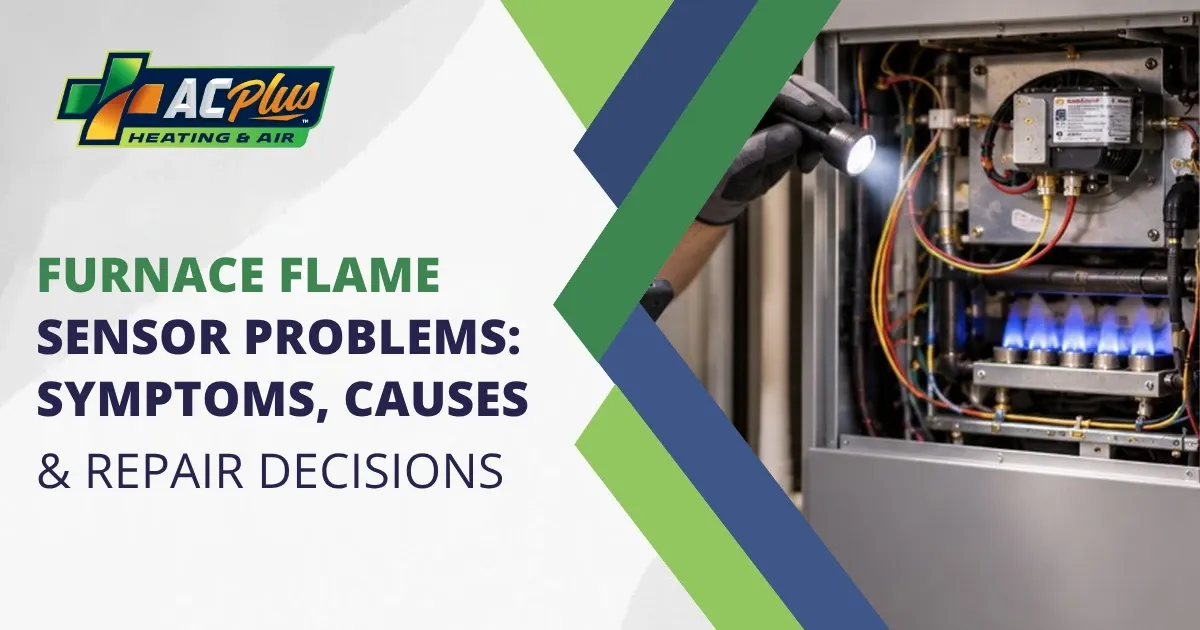
A flame sensor is a thin metal rod, usually bent in a slight curve, that sits in front of the burner flame inside your furnace. Its job is safety. It confirms that a flame is actually present when the gas valve opens.
Here is how it works:
- The thermostat calls for heat.
- The furnace starts its ignition sequence and opens the gas valve.
- The burners light.
- The flame sensor detects a tiny electrical signal (a microamp current) that passes through the flame.
- The control board sees this signal and keeps the gas flowing.
If the sensor does not detect a flame, the control board shuts the gas off within seconds. This prevents unburned gas from building up in your furnace or home.
What Are the Symptoms of a Bad Flame Sensor?
The classic symptom is a furnace that lights and then shuts off quickly. Other signs include:
- Burners ignite, then go out after a few seconds: This is the most common clue.
- The furnace repeats the start-up cycle several times: It may try again and again, then lock out.
- No heat even though the blower and ignitor seem to work: The system starts but never stays on.
- Error codes or blinking lights on the control board: Many furnaces display a code for flame failure.
- Intermittent heating: The furnace works one day and fails the next.
- Heating that worsens over time: A sensor that is slowly getting dirty may fail more often.
If you see these signs, avoid repeatedly resetting the furnace. Frequent restarts can stress components, and a lockout is a safety feature meant to protect you.
What Causes Flame Sensor Problems?
Several things can cause a flame sensor to stop working properly.
- Carbon and soot buildup: Over time, a thin layer of oxidation coats the rod and blocks the electrical signal. This is the most common cause.
- Dust and debris: Fine dust inside the furnace cabinet can settle on the sensor, especially in homes with older filters or leaky return ducts.
- Corrosion or wear: Age can degrade the metal and weaken the signal.
- Poor grounding: A loose or corroded ground connection prevents the control board from reading the flame.
- Weak or uneven flame: Dirty burners or low gas pressure can produce a flame the sensor cannot detect.
- Cracked porcelain or damaged wiring: Physical damage can interrupt the signal.
In the Inland Empire, long periods of dormancy can play a role too. Many furnaces sit idle through our long, hot summers. When the first cool morning arrives, dust and oxidation that built up over months can cause a flame sensor failure on the first startup of the season.
Last November, a Rancho Cucamonga homeowner called us on the first cold morning of the year because their furnace kept lighting and shutting off. A technician cleaned the sensor, tested the signal, and checked the burners. The furnace ran normally again in under an hour.
Can I Clean a Flame Sensor Myself?
Some homeowners attempt this, and it is a common DIY topic. If you are comfortable and careful, the general process looks like this:
- Turn off power to the furnace at the switch and the breaker.
- Shut off the gas supply to the furnace.
- Remove the furnace access panel to locate the flame sensor near the burners.
- Remove the sensor by taking out the screw that holds it in place and gently disconnecting the wire.
- Lightly clean the rod with fine abrasive material, then wipe it clean.
- Reinstall the sensor, reconnect the wire, replace the panel, and restore gas and power.
Be careful not to bend the rod or damage the part. If you are not sure, or if the furnace shuts off again after cleaning, stop and call a technician.
Working around gas appliances carries real risks. If you smell gas at any time, leave the home immediately and call your gas utility or emergency services.
Is It the Flame Sensor or Something Else?
Flame failure symptoms can look like other furnace problems. A technician checks for related issues, including:
- A dirty or failing ignitor
- Faulty gas valve
- Weak flame caused by dirty burners
- A cracked heat exchanger
- Restricted airflow or a clogged filter
- A failing control board
- Poor ground or wiring problems
Replacing the flame sensor without finding the underlying cause can lead to repeat failures. This is why testing matters. A technician measures the flame signal, checks ground connections, and inspects the burners to confirm the real source.
Should I Repair or Replace My Furnace?
A flame sensor is a small, inexpensive part, and repair is usually straightforward. Cleaning or replacing it is rarely a reason to replace the whole furnace.
Repair is usually the right choice when:
- The flame sensor is the only problem
- The furnace is under about 15 years old
- The heat exchanger is intact
- The system has been reliable otherwise
Consider replacement if:
- The furnace is 15 to 20 years old or older
- You are facing repeated repairs
- The heat exchanger is cracked
- Heating bills keep rising
- Comfort is uneven from room to room
A tune-up and inspection can tell you where your furnace stands before the winter season arrives.
What Are the Risks of Ignoring Flame Sensor Problems?
It may be tempting to keep resetting the furnace and hope it runs. That approach carries risks.
- Complete loss of heat on a cold night
- Wear on ignitors, gas valves, and control boards from repeated start-ups
- Higher energy use from short cycling
- Hidden safety issues if the real problem is a weak flame, poor combustion, or a damaged component
- Costly emergency repairs instead of a simple planned service
Need same-day AC or furnace repair? Contact AC Plus now.
How Can I Prevent Flame Sensor Trouble?
A little preparation goes a long way.
- Schedule a furnace tune-up each fall before heating season
- Replace air filters every one to three months
- Keep the area around the furnace clean and clear
- Seal return duct leaks that bring in dust
- Run the furnace briefly early in the season to test it
- Install carbon monoxide detectors on every level of your home
Annual maintenance includes cleaning and testing the flame sensor, inspecting the burners, and verifying safe operation.
Frequently Asked Questions About Furnace Flame Sensors
How do I know if my flame sensor is bad?
The most common sign is a furnace that lights and then shuts off within a few seconds.
How long does a flame sensor last?
Many last several years, though dirt and wear can shorten their lifespan.
Can a dirty flame sensor be fixed by cleaning?
Often yes, but if the problem returns quickly, the sensor may need replacement or something else may be wrong.
Is a flame sensor problem dangerous?
The sensor is a safety device, so a shutdown means it is doing its job. The danger comes from ignoring the problem or bypassing safety controls.
How much does flame sensor repair cost?
Costs vary, but it is typically one of the more affordable furnace repairs.
Get Your Furnace Running Safely with AC Plus
For more than two decades, families across Southern California have trusted AC Plus Heating & Air Conditioning for dependable comfort. Our licensed technicians diagnose the real cause of furnace problems and offer upfront pricing with same-day service. Call AC Plus Heating & Air Conditioning in Rancho Cucamonga today for reliable HVAC service, and see why your neighbors choose AC Plus.

Service Request
"*" indicates required fields
